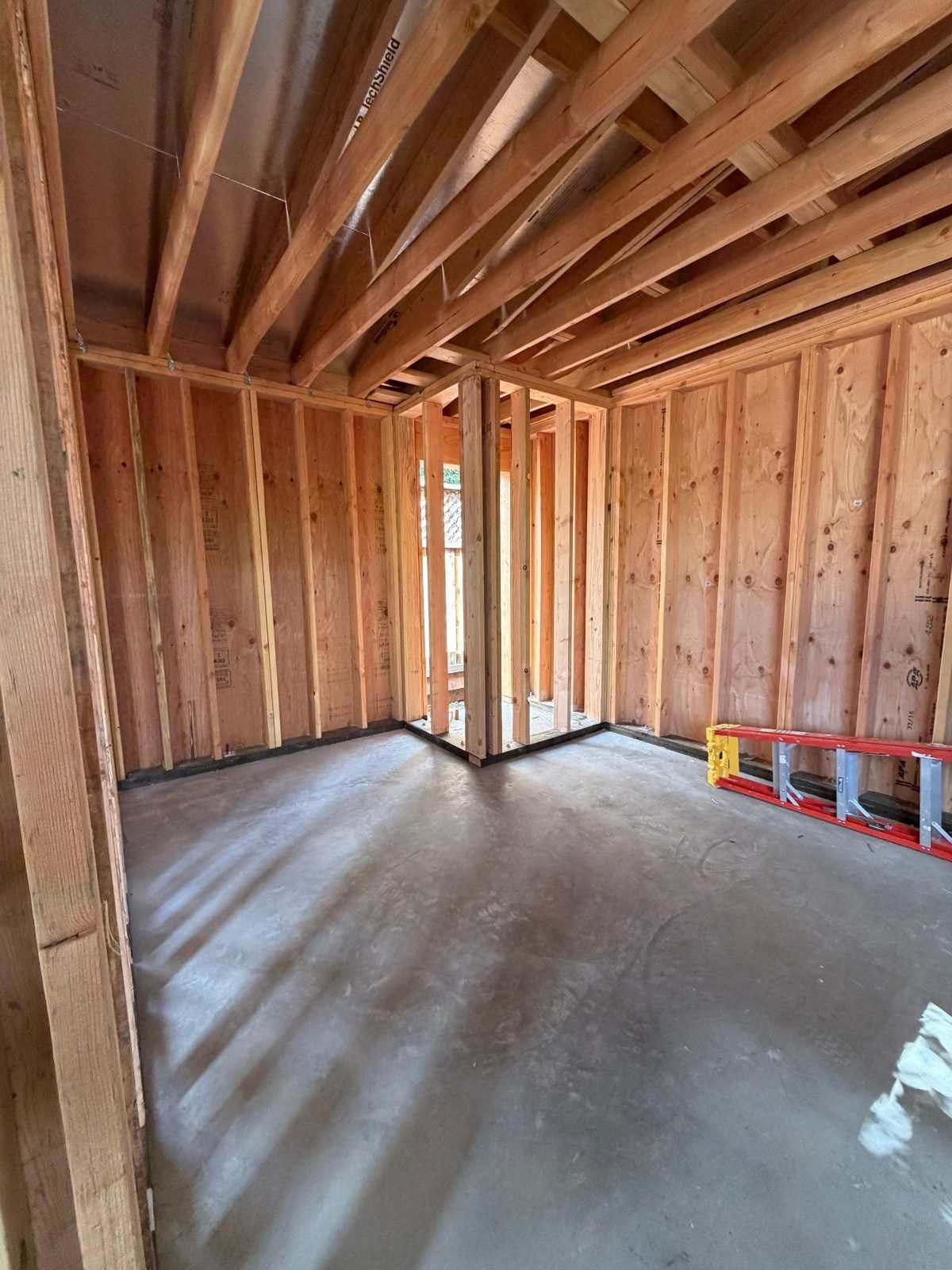
Short answer: AB 956, signed by Governor Newsom on September 29, 2026 (Chapter 791, Statutes of 2026), changes California ADU law so a lot with an existing or proposed single-family home can have two new detached ADUs instead of one, with side and rear setbacks of no more than four feet. Cities may still limit each of those units to 800 square feet of living space and apply height limits. New California laws generally take effect on January 1, 2027.
What changed
State law (Government Code Section 66323) lists ADUs that a city must approve with a building permit, without discretionary review, as long as they meet a short set of standards. Before AB 956, that list allowed one detached, new-construction ADU on a single-family lot. AB 956 changes that item to “two detached, new construction, accessory dwelling units” with four-foot side and rear setbacks.
- Number of units: up to two new detached ADUs on a lot with a proposed or existing single-family home.
- Size: a city may cap each unit at 800 square feet of livable space. That is a limit the city may impose, not a required size.
- Height: the state’s ADU height rules (Government Code 66321) apply, so the allowed height depends on the lot and the unit type.
- Setbacks: no more than four feet from the side and rear property lines.
- Junior ADUs: if a lot already has two new detached ADUs, a city is not required to approve a junior ADU on the same lot through the same streamlined path.
- Rentals: rentals of these units must still be for terms longer than 30 days.
- HOAs: the bill also updates the Civil Code so HOA and deed-restriction protections for ADUs apply to lots “zoned to allow single-family residential use.”
What it does not change
- You still need a building permit, and plans still go through plan check.
- Fire, building and energy codes still apply, and so do utility requirements such as sewer capacity, septic approval in areas without sewer, and electrical service.
- Local rules on trees, flood zones, historic properties and fire hazard areas can still shape where the units go.
- The option to convert space inside the existing home or garage into an ADU or junior ADU is unchanged.
What it means in the Bay Area
Many Santa Clara County and Peninsula lots are deep enough for two compact backyard units. In practice, the questions that decide whether two detached ADUs fit are:
- Lot layout: rear-yard depth, side access for construction and a path of travel to each unit.
- Utilities: whether the existing sewer lateral, water service and electrical panel can serve three dwellings, or need upgrades.
- Trees and grading: protected trees in cities like Palo Alto and slopes in Los Gatos, Saratoga and Los Altos Hills.
- Local fees: some cities waive certain impact fees for smaller units (San Jose, for example, waives school and park fees under 750 sq ft), so unit size affects cost.
- Timing: cities update their ADU ordinances and checklists after new state laws. Expect some cities to publish updated guidance in early 2027.
Frequently asked questions
Can I build two detached ADUs and keep my house?
Yes. That is exactly the case AB 956 addresses: a lot with an existing or proposed single-family home.
How big can the two units be?
Under this streamlined path a city may limit each unit to 800 sq ft of living space. Larger units follow the city’s regular ADU standards, which vary by city.
When can I apply?
New state laws generally take effect January 1, 2027. Plans can be designed now, and we confirm with the city when it accepts applications under the new rule.
Can I still add a junior ADU?
Possibly, but if two new detached ADUs are built, the city does not have to approve a junior ADU on the same lot through the streamlined path.
Thinking about two ADUs?
Axiom Renovation Inc. (CA License #1105006) is a San Jose design-build contractor that designs, permits and builds ADUs across the Bay Area. We check your lot’s layout, utilities and city rules at a free site assessment and tell you plainly whether one or two units make sense. See our Bay Area ADU services or call 408-702-2022.
This article explains the law in general terms and is not legal advice. Sources: AB 956 chaptered text (Chapter 791, Statutes of 2026); California YIMBY; Holland & Knight, “California’s 2027 Housing Laws”; Brownstein, “California Enacts Another Wave of 2026 Housing Bills.”